
By Dave Gordon
AI won't fix a cow path
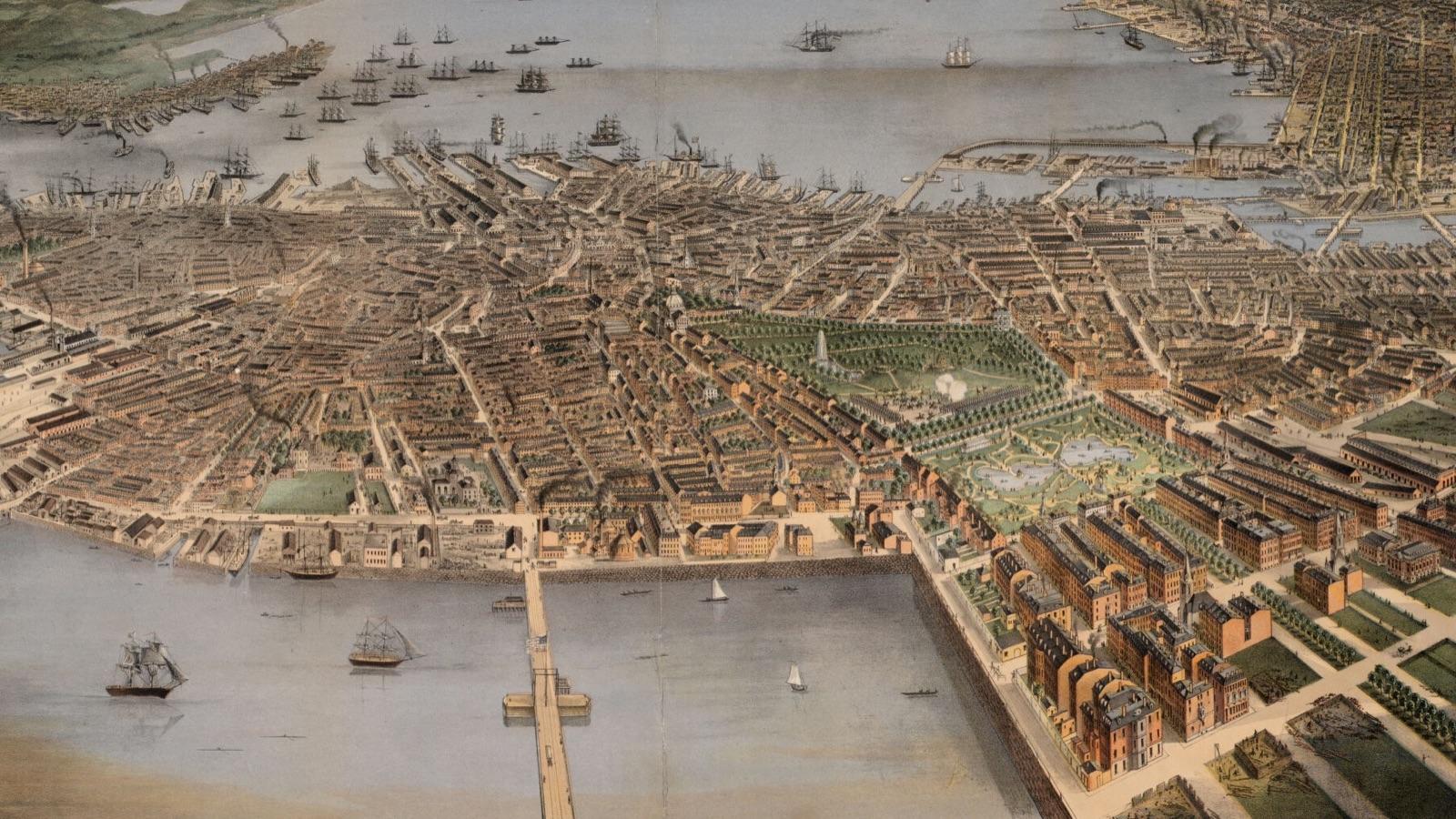
I live in Boston, and I've stopped trying to explain our streets to visiting friends. Strip the street names off a map of downtown, and it looks like what my five-year-old does to my notebook when I leave a pen within reach.
Local legend says the streets were paved over old cow paths. Historians say that's mostly myth, but it feels true: a path that made sense at the time got paved, then built up on both sides until nobody questioned it.
Our industry has its own cow path: the research process, worn in over decades. Brief, questionnaire, programming, QA, field, crosstabs, deck. Agencies built their businesses along that route, with each team set up next to the step it depends on, and pricing and timelines set by the length of the trip.
AI tempts agencies to pave it: faster programming, faster fielding, faster decks. Paving the cow path isn't the mistake. Stopping there is.
When Boston filled in the Back Bay to create a whole new neighborhood, it didn't trace the old paths. It laid out a planned grid, kept the old streets running while it built, and ended up with some of the most valuable ground in the city.
So what does an agency's Back Bay look like? It shows up with answers before anyone writes a brief.
- Answers on demand, not one bid at a time. A client's question shouldn't have to wait for a quote and a six-week project. Each answer should build on what you've already learned for that client.
- One continuous thread instead of a tangle of handoffs. Design, programming, QA, fielding, and reporting as a single flow, with fewer places for time and meaning to get lost.
- In the room while the choice is still open. Evidence that arrives before the decision, not in a deck after it's made.
So yes, pave the cow path. Your clients need faster answers today. But don't stop there. Boston took 25 years to build the Back Bay. You won't get that long. Start sketching, and building, the new ground your agency will stand on.
Helping agencies do both is exactly what drew me to Flashpoint.AI. I love that we give agencies a low-friction surface for the route they already run, so they can deliver for clients faster and more reliably. But what excites me most is helping our partners plan what comes next, and giving them an open platform to build it on: one grounded in proven rigor, quality, and methodology, where clients get answers they can act on, often before they think to ask.
Wherever you are — still paving or already sketching your Back Bay — I'd love to hear about it: what's working, what's stuck, what you're trying next. And as always, if I know someone wrestling with the same questions, or someone who's already cracked them, I'm happy to make the introduction. Drop me a note.